Unclassified // For public releaseRELEASE 001 — OXCART — In developmentDoc. BSB/PUB/26-01
BLACKSITE BOYS
Facility 001*BSB-1958-008*

Project Greek Island

Designation
Emergency relocation center for the United States Congress
Location
The Greenbrier
White Sulphur Springs, West Virginia
Period
1958–1995
Status
Decommissioned 1995. Now a tour.
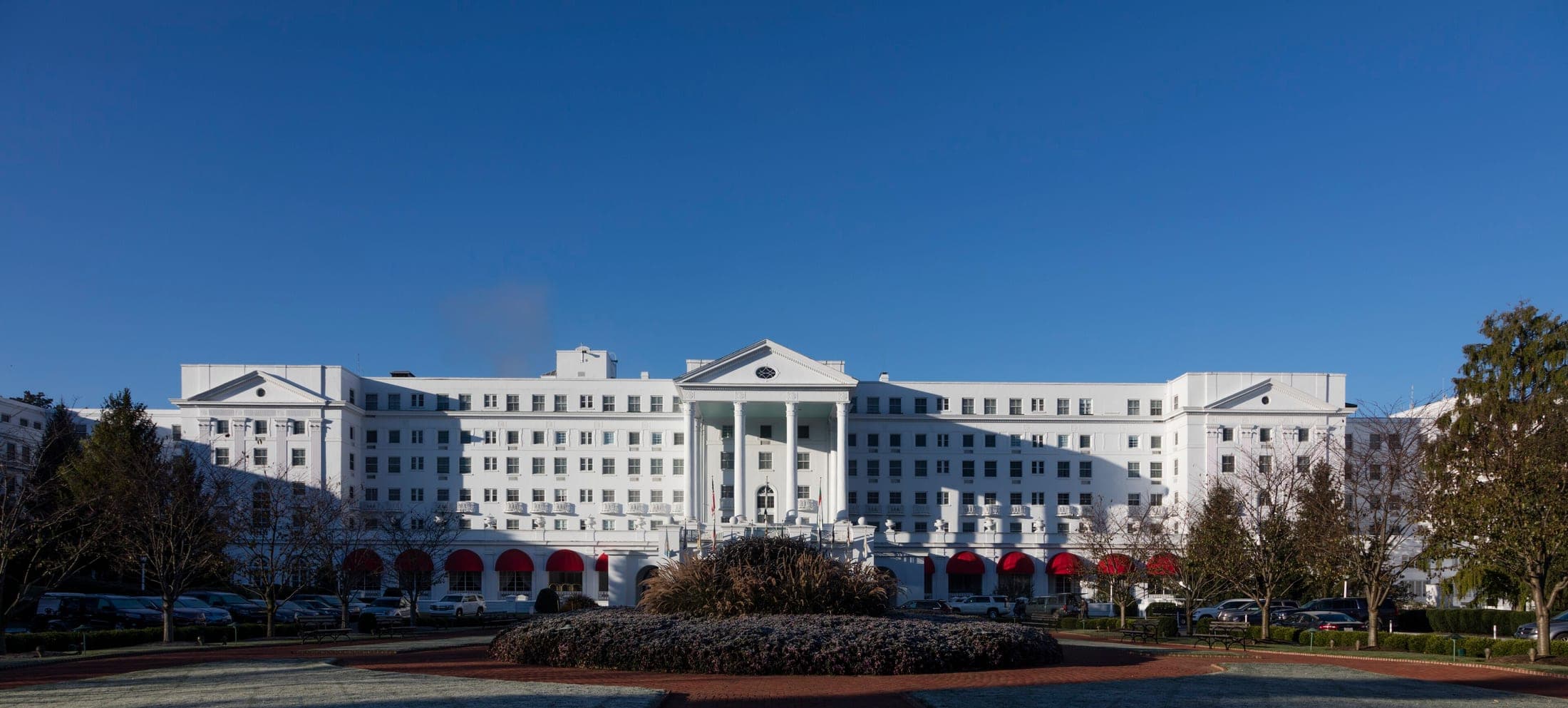
Panoramic view of The Greenbrier resort hotel, White Sulphur Springs, West Virginia
PL. 01The Greenbrier, White Sulphur Springs. The facility is not visibleCarol M. Highsmith / Library of Congress

Summary

A resort is a reasonable place for a great many important people to arrive at once without anyone asking why. So the bunker was built under one.

Objective:
House the United States Congress after a nuclear war.
Capacity:
1,100.
Cover story:
Exhibition hall. Television repair.
Status:
Decommissioned. Open for tours.

In 1958 the federal government reached an arrangement with The Greenbrier, a resort in White Sulphur Springs, West Virginia. The hotel would build a new wing. Underneath it, the government would build a fallout shelter large enough for both houses of Congress — about 1,100 people — for sixty days.

Most members of Congress were not told. The hotel’s guests were, in a sense, shown it: some of the bunker’s largest rooms, including an exhibition hall, doubled as convention space and were used for trade shows and meetings. The blast doors were concealed behind panels in the walls.

The doors were made by the Mosler Safe Company. The largest weighed about 25 tons and was 19.5 inches thick, and was hung so precisely that it could be opened with about fifty pounds of force.

1,100Beds in the bunker. Also, televisions in the hotel.

§ 01Forsythe Associates

The facility had to be kept ready, continuously, for decades, by people who could not say what they did. For thirty years a small group of government employees worked at The Greenbrier as staff of a private company, Forsythe Associates, which was contracted to service the hotel’s televisions. There were about 1,100 televisions. The men did repair them. It took about a fifth of their time.

The rest went into the bunker: rotating sixty days of food, maintaining the power plant, the decontamination showers, a clinic, a cafeteria, two auditoriums sized for the House and the Senate, a broadcast studio with a backdrop of the Capitol that could be changed with the seasons, and a pathological waste incinerator.

Dwg. BSB-58-008-AExhibit hallHotel convention useHouse chamberSenate chamberBroadcast studioCapitol backdropDormitoriesCafeteriaClinicDecontaminationCorridorPower plantWater storageIncineratorPathologicalStores60 daysBD-1Vehicle entranceBD-2From hotelBD-3BD-4West Virginia Wing aboveNSchematic — not to scale — blast doors shown solid
FIG. 01Facility plan, schematic. Not to scale. Blast doors marked.Scale N.T.S.

§ 02Disclosure

On 31 May 1992 the Washington Post published “The Ultimate Congressional Hideaway,” by Ted Gup, which described the bunker in detail. The government ended its arrangement with the hotel in 1995. The Greenbrier now runs tours. Photography is not permitted.
[A]

Chronology

05 entries
  1. Arrangement reached with The Greenbrier.
  2. Construction begins alongside the West Virginia Wing.
  3. Facility complete. Maintained thereafter by Forsythe Associates.
  4. Washington Post publishes “The Ultimate Congressional Hideaway.”
  5. Government lease ends.
[B]

Plates

02 additional
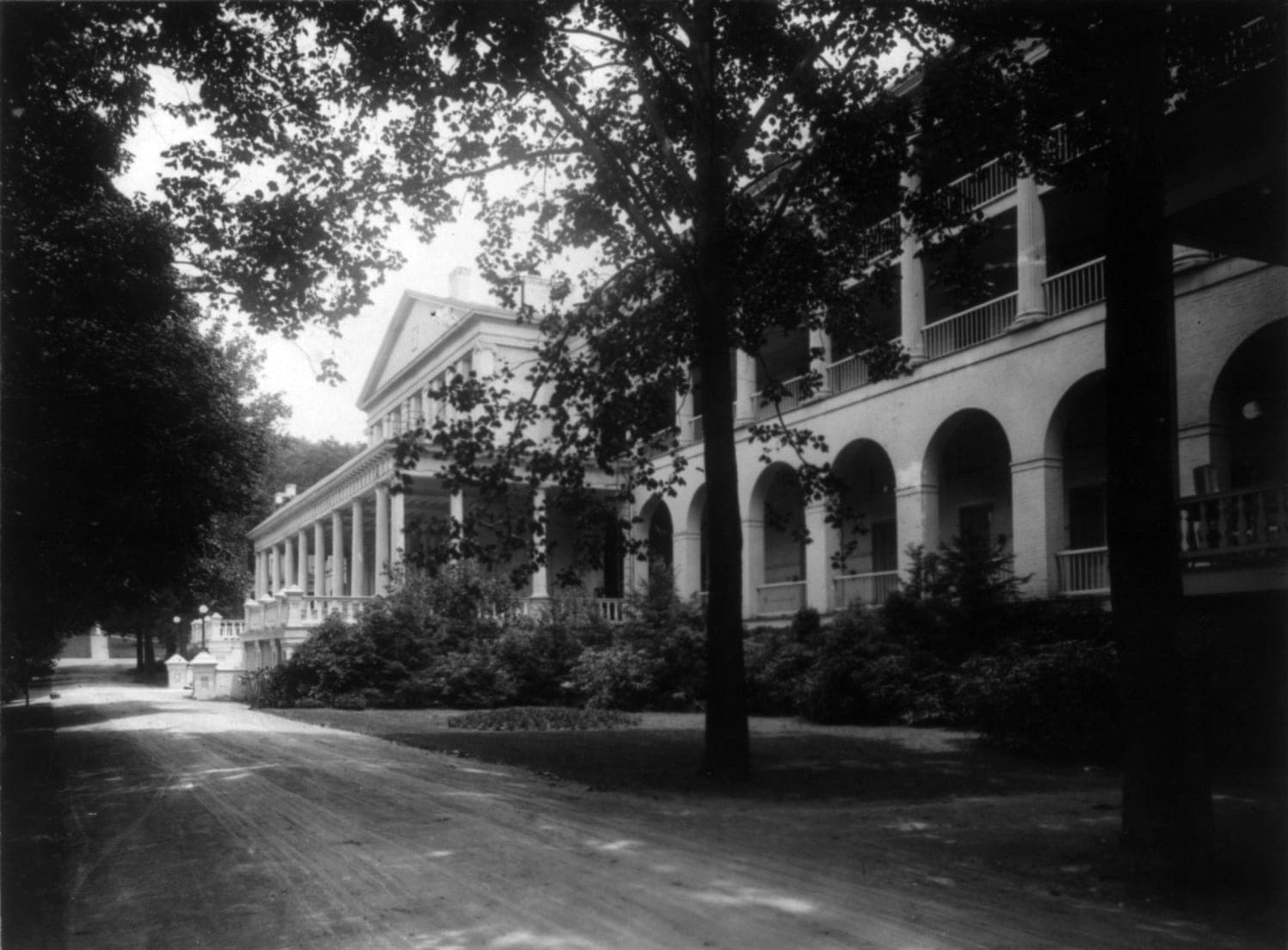
The Greenbrier hotel, White Sulphur Springs, West Virginia, in 1916
PL. 02The Greenbrier in 1916, before the West Virginia WingUnknown photographer (Library of Congress)
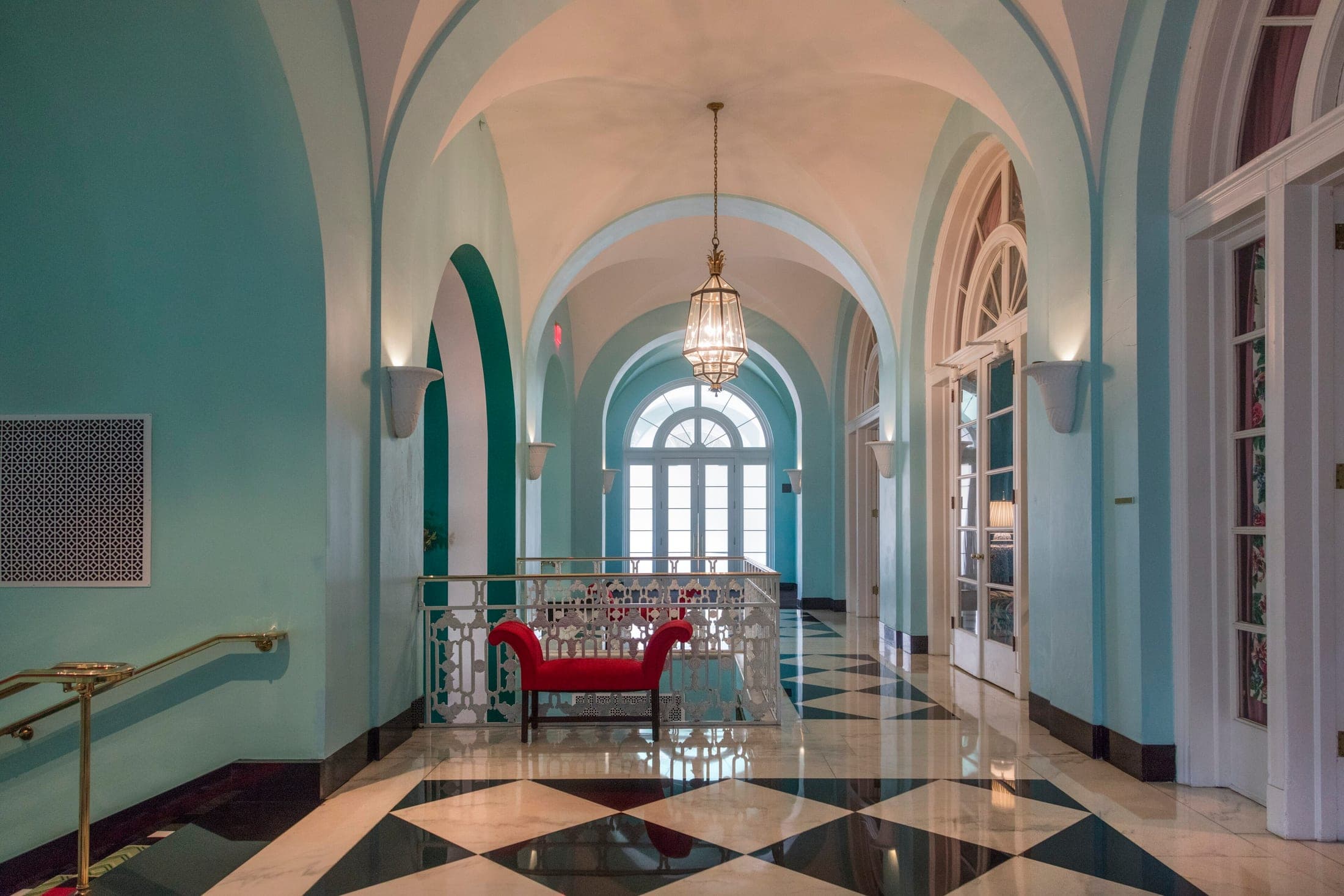
Dorothy Draper–decorated hallway inside The Greenbrier resort hotel
PL. 03A hallway upstairsCarol M. Highsmith / Library of Congress
[C]

Documents in this file

01 items
DOC 01

The Ultimate Congressional Hideaway

Origin
Ted Gup, The Washington Post
Date
31 May 1992

Scan pending. Reference retained for the record.

[D]

Sources

Public record
  1. Ted Gup, “The Ultimate Congressional Hideaway,” The Washington Post (31 May 1992)
  2. Atomic Heritage Foundation, “Greenbrier Bunker”