Unclassified // For public releaseRELEASE 001 — OXCART — In developmentDoc. BSB/PUB/26-01
BLACKSITE BOYS
Asset 001*BSB-1982-007*

Tacit Blue

Designation
Low-observable battlefield surveillance demonstrator
Location
Groom Lake
Nevada. Now: Dayton, Ohio
Period
1982–1985
Status
Retired. On public display.
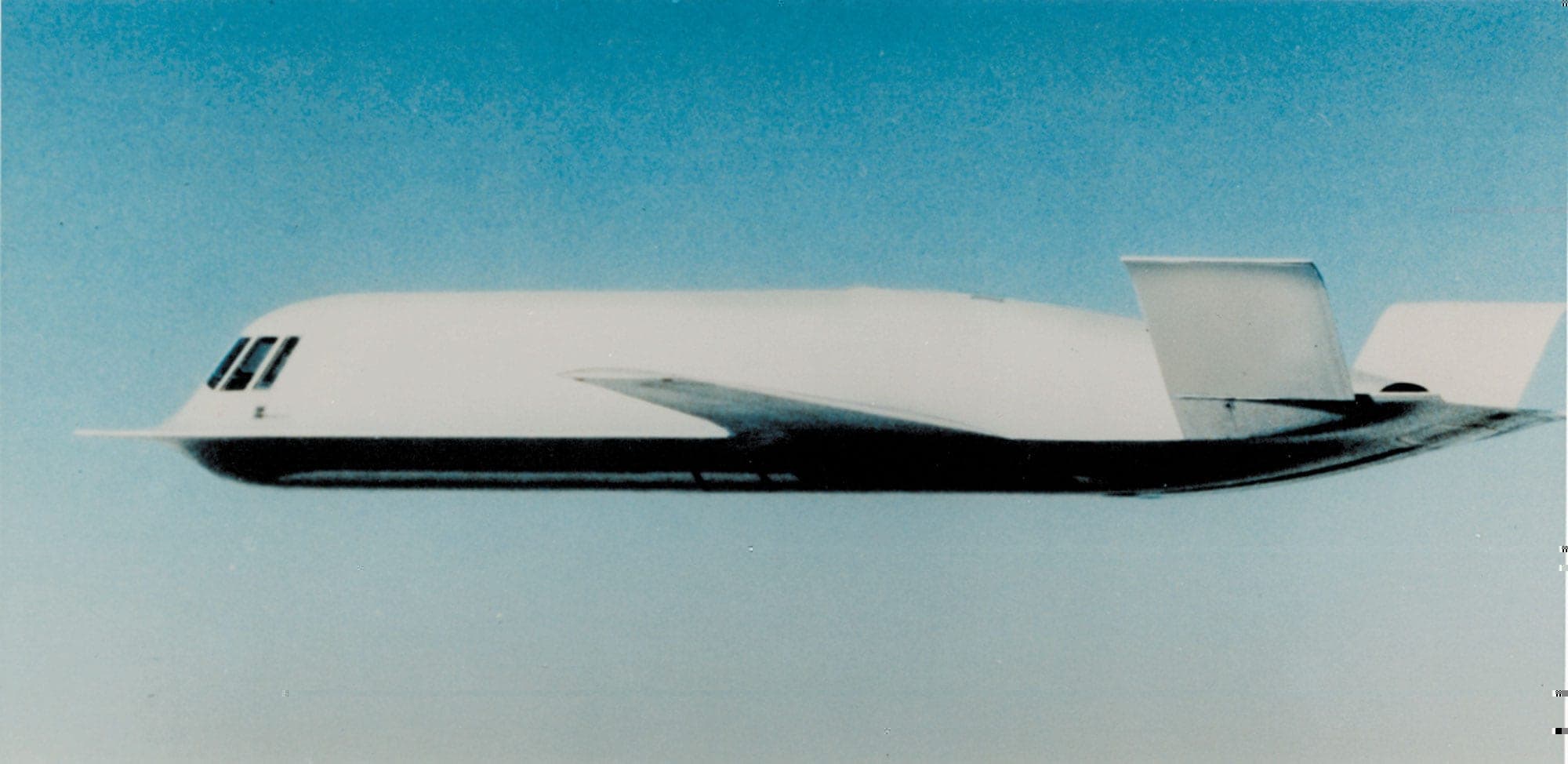
Northrop Tacit Blue stealth demonstrator in flight, side view
PL. 01Northrop Tacit Blue stealth demonstrator in flight, side viewU.S. Department of Defense

Summary

Have Blue proved flat surfaces could defeat radar. Tacit Blue proved curved ones could, which mattered more, and looked worse doing it.

Objective:
Watch the battlefield without being seen.
Nickname:
The Whale.
Flights:
135.
Status:
On display. Dayton, Ohio.

Tacit Blue was built to answer a narrower question than its predecessor. The military wanted an aircraft that could loiter near a front line, look deep behind it with radar, and not be shot down for doing so. That meant an aircraft that could transmit without being detected, and be looked at without being seen.

Northrop, which had lost the Have Blue competition to Lockheed, built it. Its engineers abandoned facets. Tacit Blue was the first stealth aircraft designed with curved surfaces: a deep, slab-sided fuselage with a rounded top, a single flush inlet on its back, straight wings and two outward-canted tails.

“Arguably the most unstable aircraft man had ever flown.”
— John Cashen, Northrop

It stayed in the air by way of a quadruple-redundant fly-by-wire system. The people who worked on it called it the Whale. Some called it the alien school bus.

24ftSpan of the tail. Have Blue’s entire wingspan was 22 ft 6 in.
Dwg. BSB-82-007-A55'-10"48'-2"24' tailFlush dorsal inletCockpitTails, canted outwardRadar bayFuselage-mountedSidePlanNorthrop — first flight 5 Feb 1982
FIG. 01Side elevation. Top-mounted inlet; radar carried in the fuselage.Scale 1:96

§ 01135 flights

It first flew on 5 February 1982 at Groom Lake, Nevada, with Northrop test pilot Richard Thomas. Over the next three years it made 135 flights and logged about 250 hours. Ken Dyson, who had ejected from the second Have Blue, flew it too.

The program ended in 1985. Its radar work fed into the E-8 Joint STARS, and its curves into the B-2 Spirit. The aircraft was kept in storage until it was declassified on 30 April 1996, and then put on display at the National Museum of the United States Air Force in Dayton, Ohio. It remains there, in public, looking exactly as strange as it did in secret.
[A]

Chronology

05 entries
  1. First flight, Groom Lake. Richard G. Thomas.
  2. Flight test begins. 135 flights, about 250 hours, over three years.
  3. Program concludes. Aircraft placed in storage.
  4. Declassified.
  5. On display, National Museum of the USAF, Dayton, Ohio.
[B]

Plates

03 additional
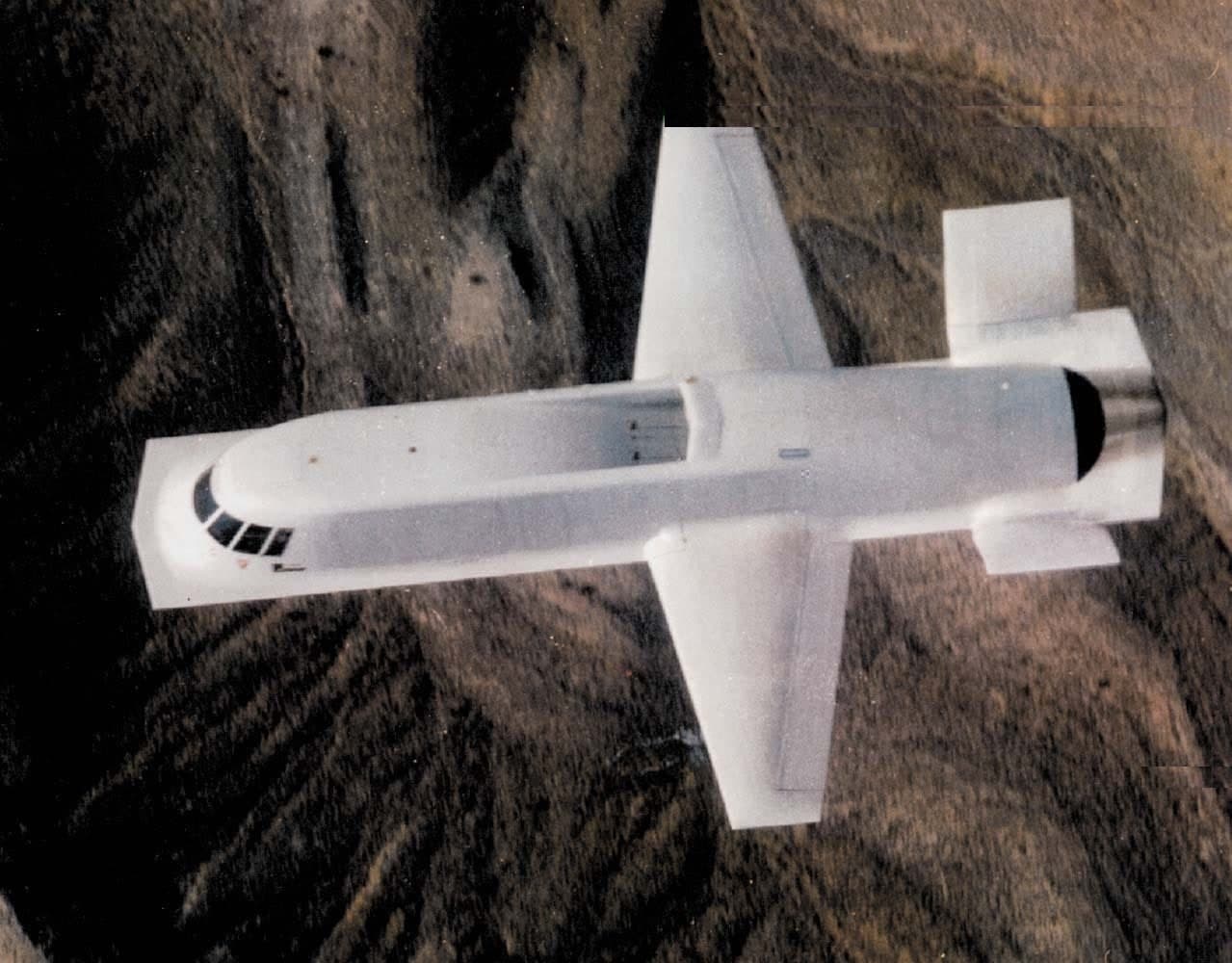
Northrop Tacit Blue in flight seen from above over desert terrain (minor scan artifacts retouched)
PL. 02From above. The wings are straightU.S. Department of Defense
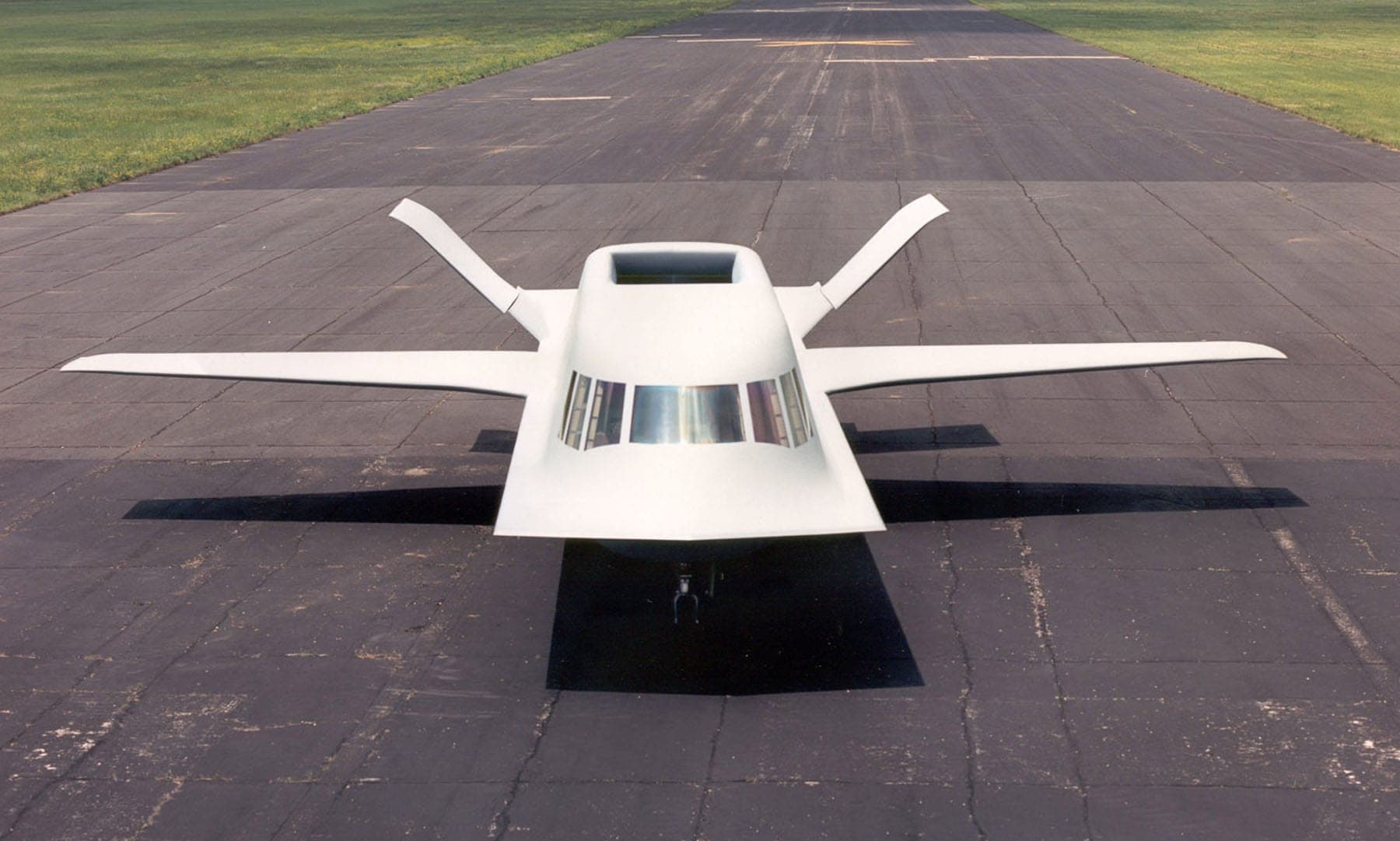
Northrop Tacit Blue, head-on view, after transfer to the National Museum of the U.S. Air Force
PL. 03Head-on, May 1996, after declassificationU.S. Air Force
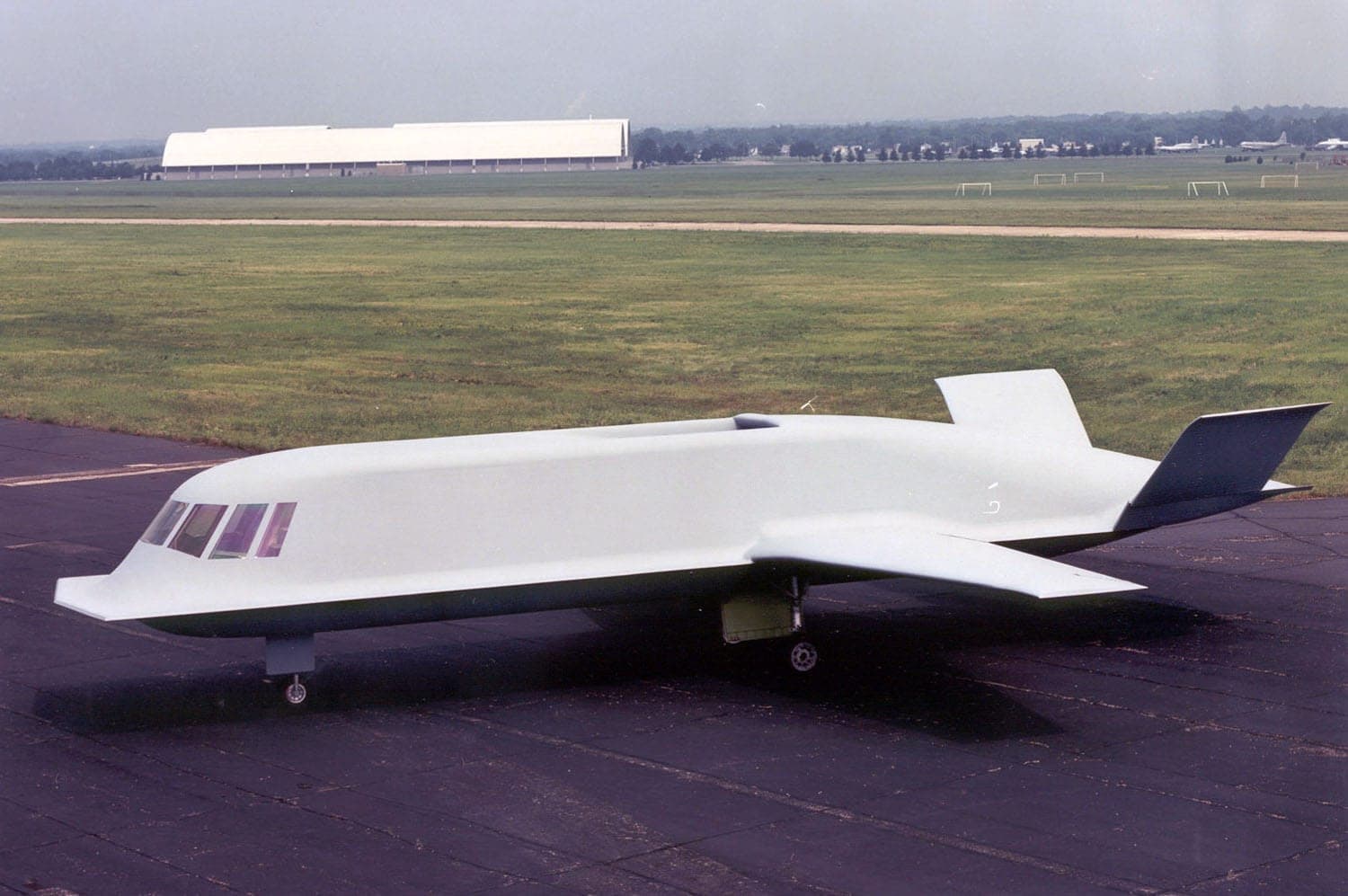
Northrop Tacit Blue 'Whale' on the ramp at Wright-Patterson AFB for the National Museum of the U.S. Air Force
PL. 04On the ramp at Wright-Patterson AFB, 1996U.S. Air Force
[C]

Documents in this file

01 items
DOC 01

Northrop Tacit Blue — fact sheet

Origin
National Museum of the United States Air Force
Date
1996–

Scan pending. Reference retained for the record.

[D]

Sources

Public record
  1. National Museum of the United States Air Force, “Northrop Tacit Blue”