In the early 1970s the Soviet Pacific Fleet’s submarine base at Petropavlovsk, on the Kamchatka Peninsula, communicated with the mainland through a cable across the floor of the Sea of Okhotsk. Because the sea was, in practice, Soviet, much of the traffic on the cable was not encrypted.
Finding the cable was a matter of finding where it came ashore. Captain James Bradley, of naval intelligence, remembered signs along the Mississippi warning boats not to anchor over buried cables. In October 1971 the submarine USS Halibut, inside Soviet waters, found the equivalent signs on the Okhotsk coast. Then it found the cable.
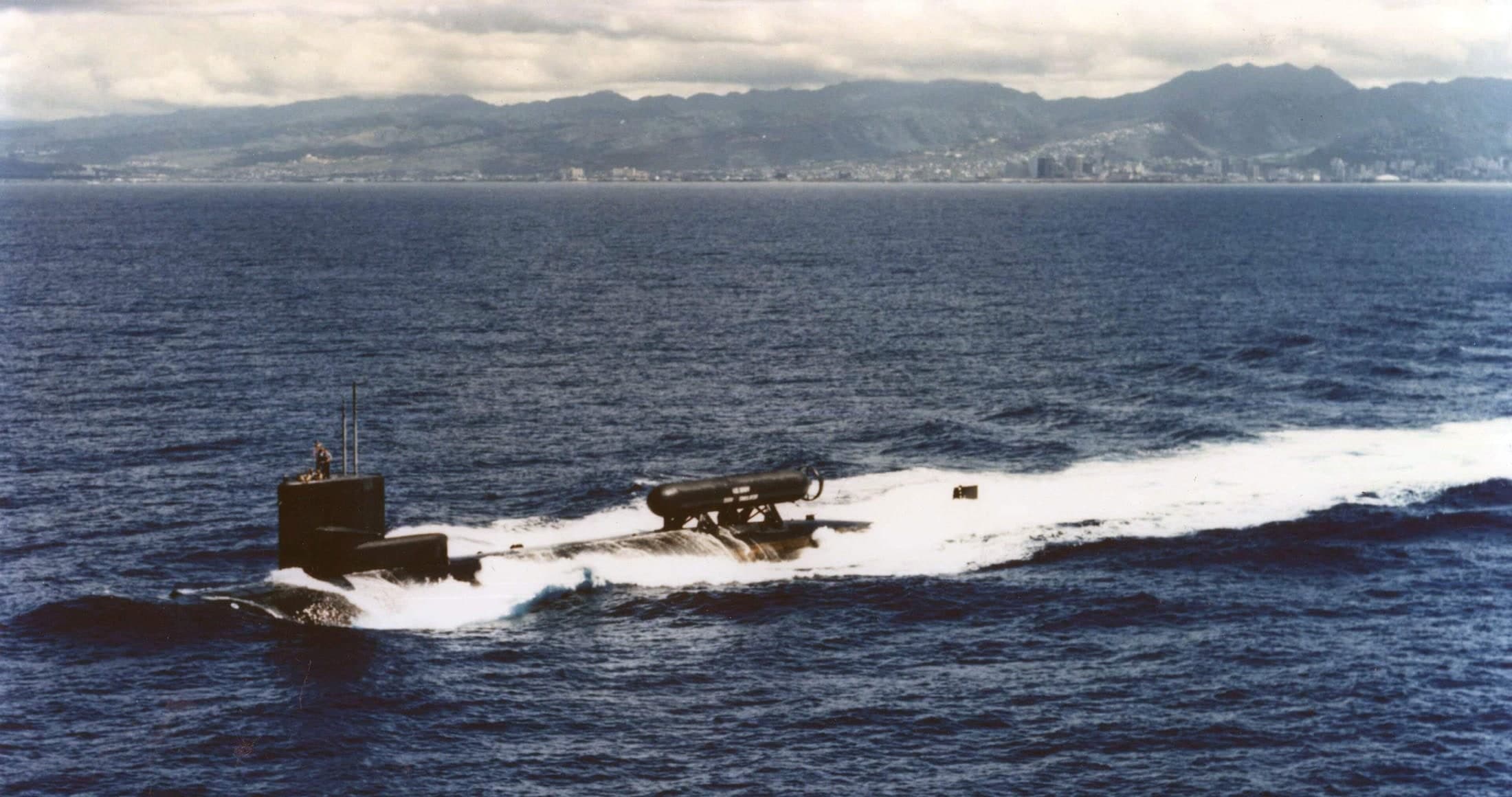
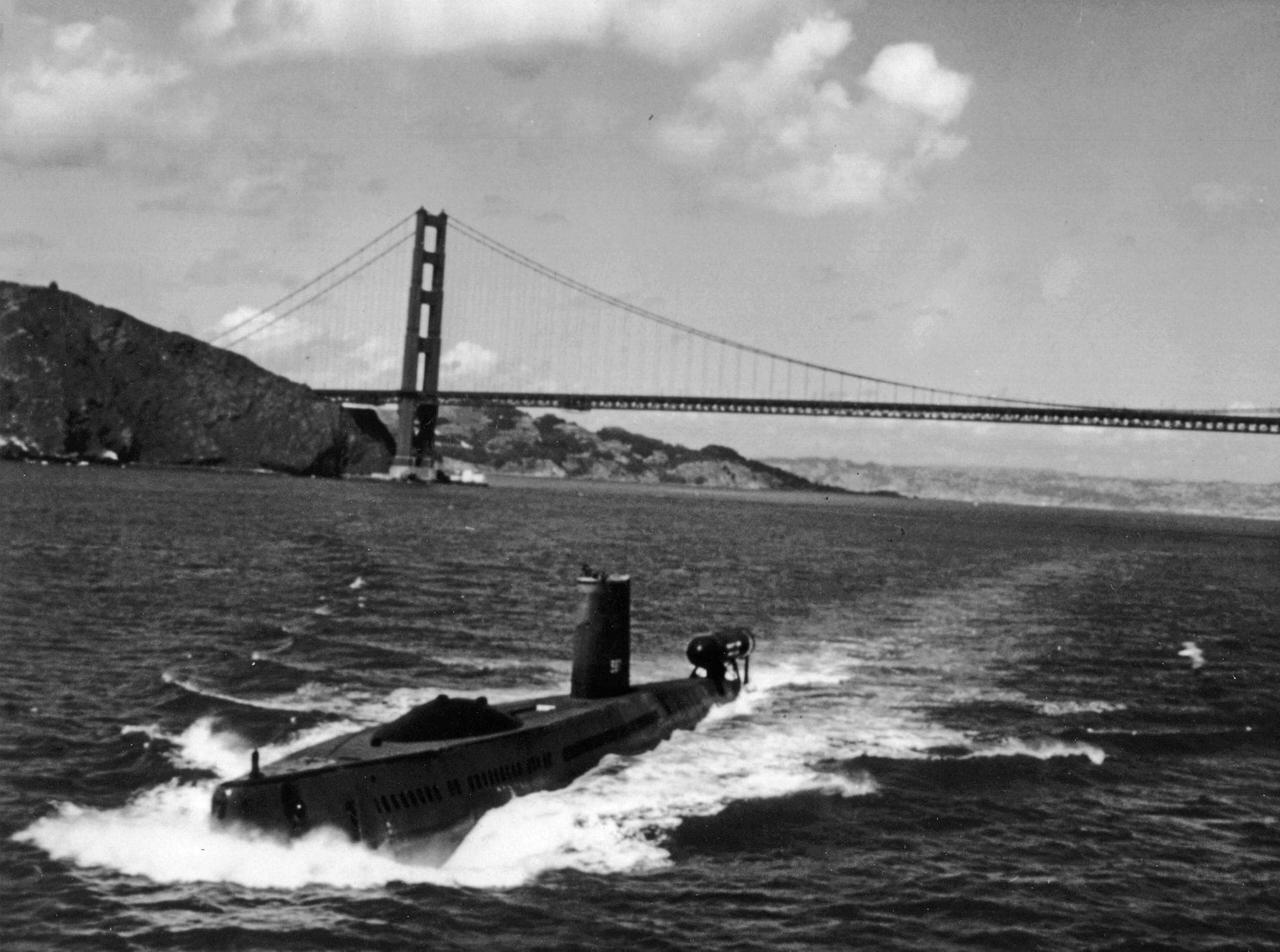
Halibut was an unusual submarine. Officially, the large cylinder on its back was a deep-submergence rescue vehicle. In fact it was a chamber from which divers could leave the boat at depth.
The divers fitted a recording device about twenty feet long around the cable. It picked up the signals by induction, without cutting into the sheath, and it was designed to fall away if the Soviets ever raised the cable for repair. Periodically a submarine returned, a diver exchanged the tapes, and the recordings went to the National Security Agency.
Later devices were larger, powered by a small radioisotope generator, and could record for a year. They were serviced by USS Parche, USS Seawolf and USS Richard B. Russell. Coordinates of the site have not been published.
§ 01About $35,000
On 14 January 1980 Ronald Pelton, a former NSA communications specialist in financial difficulty, walked into the Soviet embassy in Washington. He brought no documents. He worked from memory. Over the next five years the KGB paid him roughly $35,000 for what he could recall, including a device on a cable in the Sea of Okhotsk.
In 1981 American satellites photographed Soviet ships, among them a salvage vessel, over the site. The pod was gone.
Pelton was arrested in November 1985 and convicted in June 1986. He was released in 2015. The pod was later displayed in Moscow, in a museum.