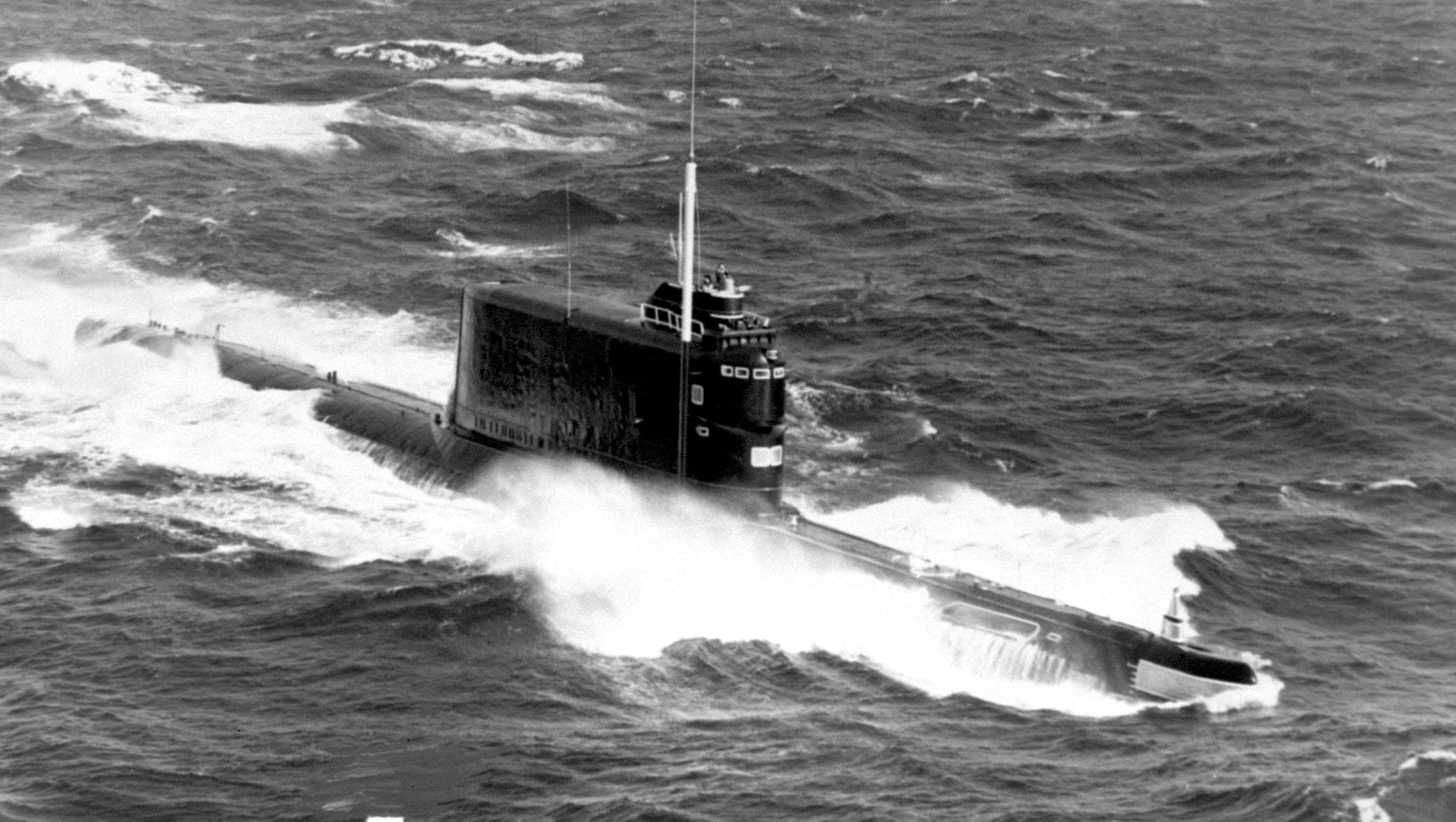
In March 1968 a Soviet Golf II-class submarine, K-129, sank in the North Pacific with ninety-eight men aboard and three nuclear ballistic missiles in its sail. The Soviet Navy searched for weeks and did not find it. The United States, which had been listening, did.
The wreck lay at 16,500 feet, roughly 1,560 miles northwest of Hawaii. A Navy submarine, USS Halibut, photographed it. Nothing of that size had ever been lifted from that depth. The Central Intelligence Agency decided to lift it anyway.
§ 01A ship for a reason
The plan required a vessel that did not exist, built for a purpose no one could state. The agency turned to Howard Hughes, whose public reputation made almost any undertaking plausible. Hughes’ Summa Corporation announced that it would mine manganese nodules from the floor of the Pacific — speculative, but respectable — and commissioned a ship to do it.
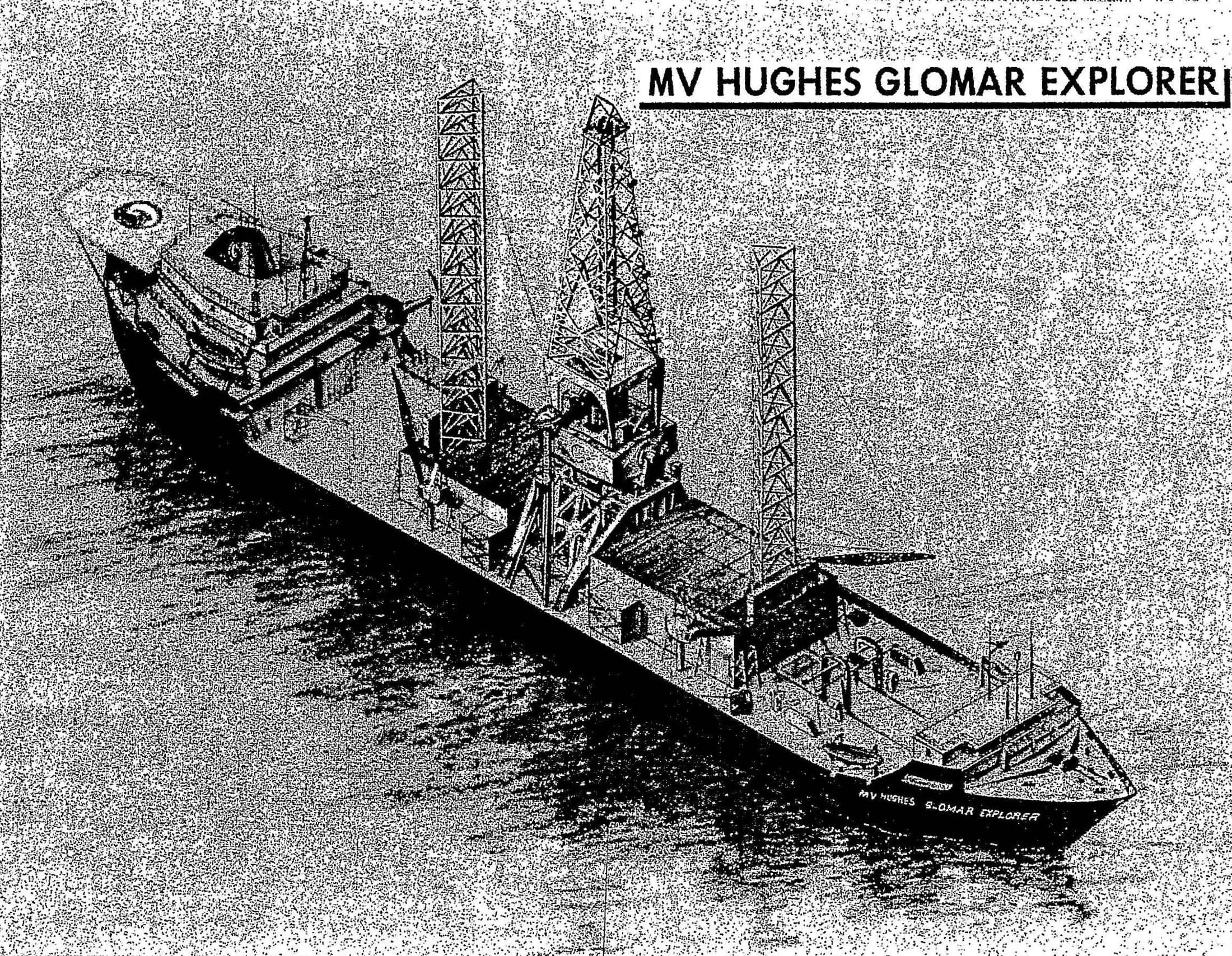
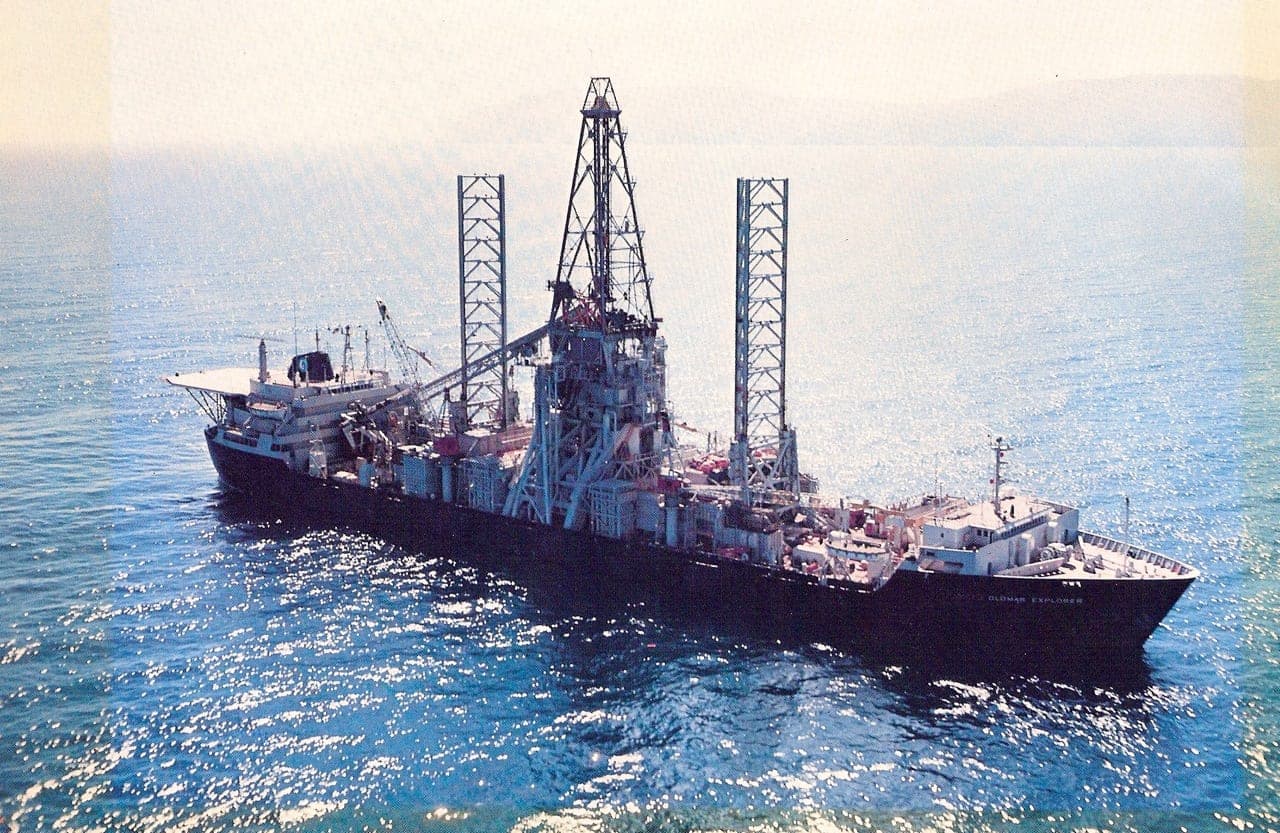
The Hughes Glomar Explorer was launched on 4 November 1972 at Sun Shipbuilding in Chester, Pennsylvania. It had a derrick amidships and, below the waterline, a well nearly two hundred feet long through which something very large could be brought inside the hull without anyone outside seeing it.
The claw — officially the Capture Vehicle, informally Clementine — was built separately and kept out of sight inside a submersible barge, HMB-1, which could sink beneath the ship and pass its cargo up into the hull. The cover was convincing enough that parts of the mining industry began to take the ocean floor seriously.
§ 02The lift
The ship arrived on station on 4 July 1974. Over the following weeks it lowered a string of steel pipe, section by section, until the claw reached the bottom. Two Soviet vessels came to watch. The crew stacked crates on the helicopter deck so that nothing could land on it.
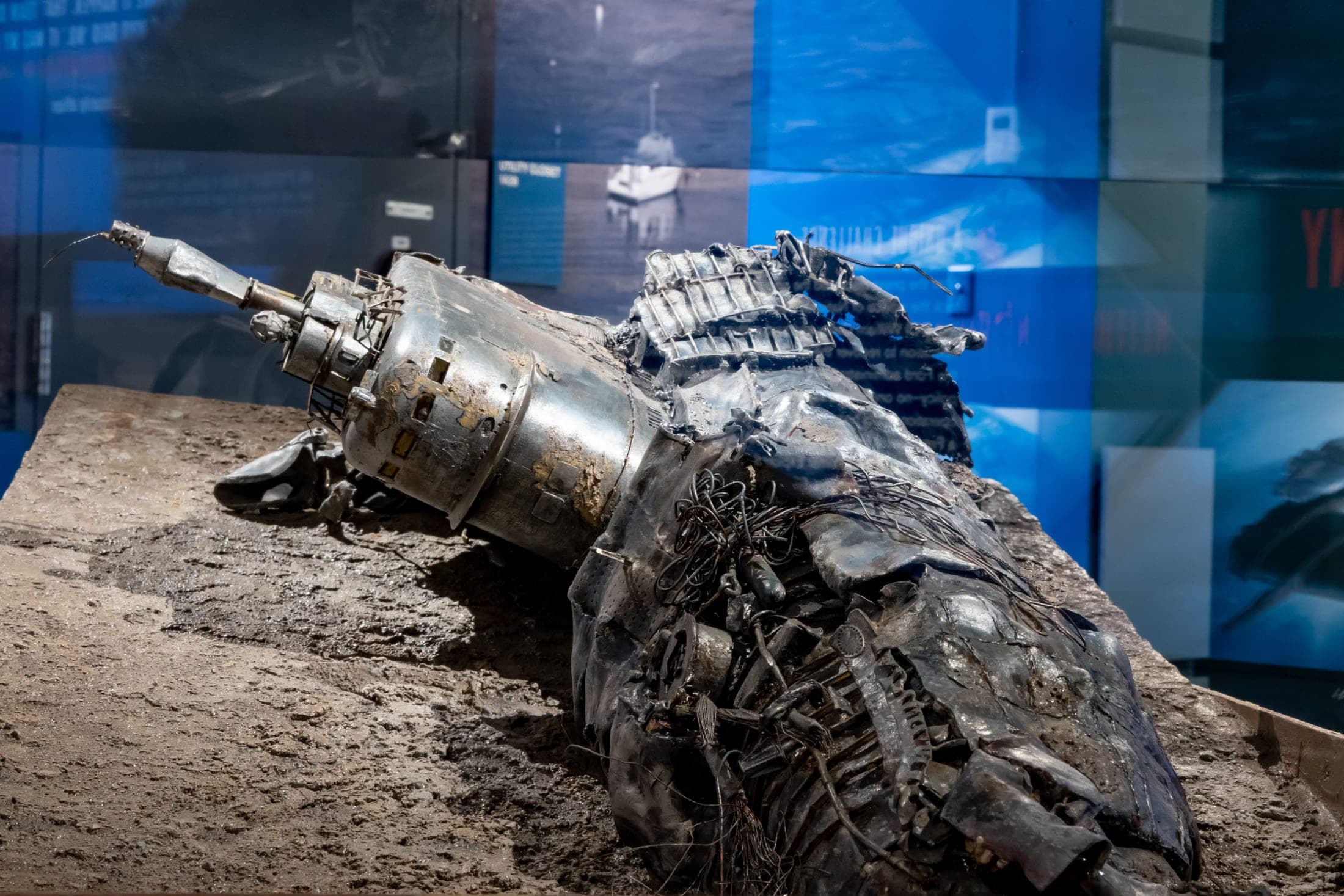
The lift began around 1 August. Partway up, several of the claw’s grabber arms failed and most of the submarine broke away and fell back to the seafloor. What remained — a 38-foot section of the bow — was brought into the ship about a week later.
Inside were the remains of six Soviet sailors. On 4 September 1974 they were buried at sea with military honors, in a ceremony conducted partly in Russian, and filmed. In 1992 the Director of Central Intelligence gave a copy of the film to Boris Yeltsin.
§ 03Disclosure
In June 1974, a month before the lift, Summa’s offices at 7000 Romaine Street in Hollywood were burgled. Among the material taken was a document linking Hughes to the CIA. In February 1975 the Los Angeles Times ran a version of the story, under the name the press would keep using: Jennifer — which was in fact the name of the security compartment that protected it. Jack Anderson broadcast it in March. A second mission, MATADOR, was cancelled.
When a journalist filed a Freedom of Information Act request about the ship, the agency replied in a form that has since become doctrine: it could neither confirm nor deny that the records existed. See The Glomar Response.
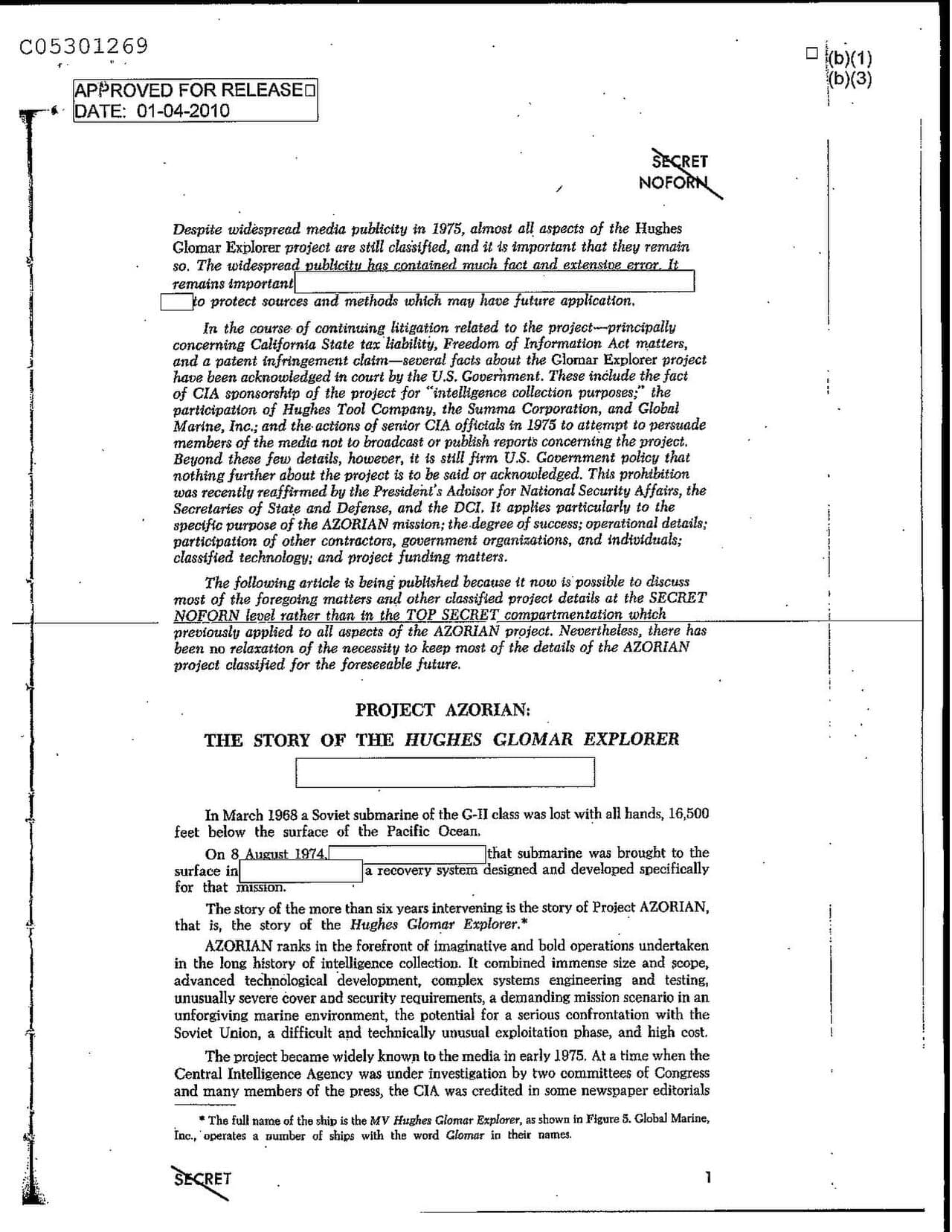
The cost is usually given as around $800 million, in 1970s dollars. The CIA released its own internal history of the operation in 2010, with redactions.