After a U-2 was shot down over the Soviet Union on 1 May 1960, the United States had no way left of photographing Soviet territory. It had been trying for more than a year to do it from space.
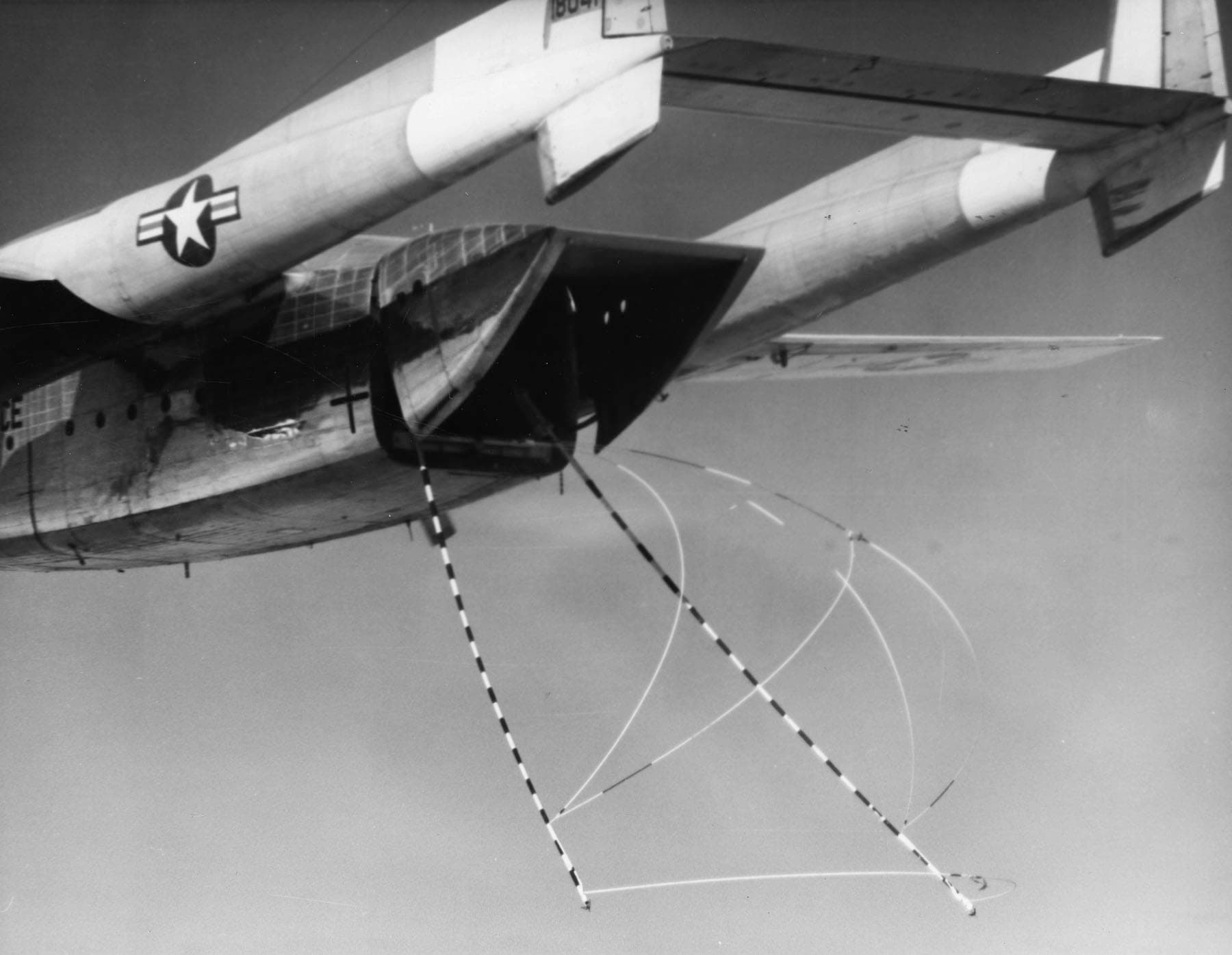
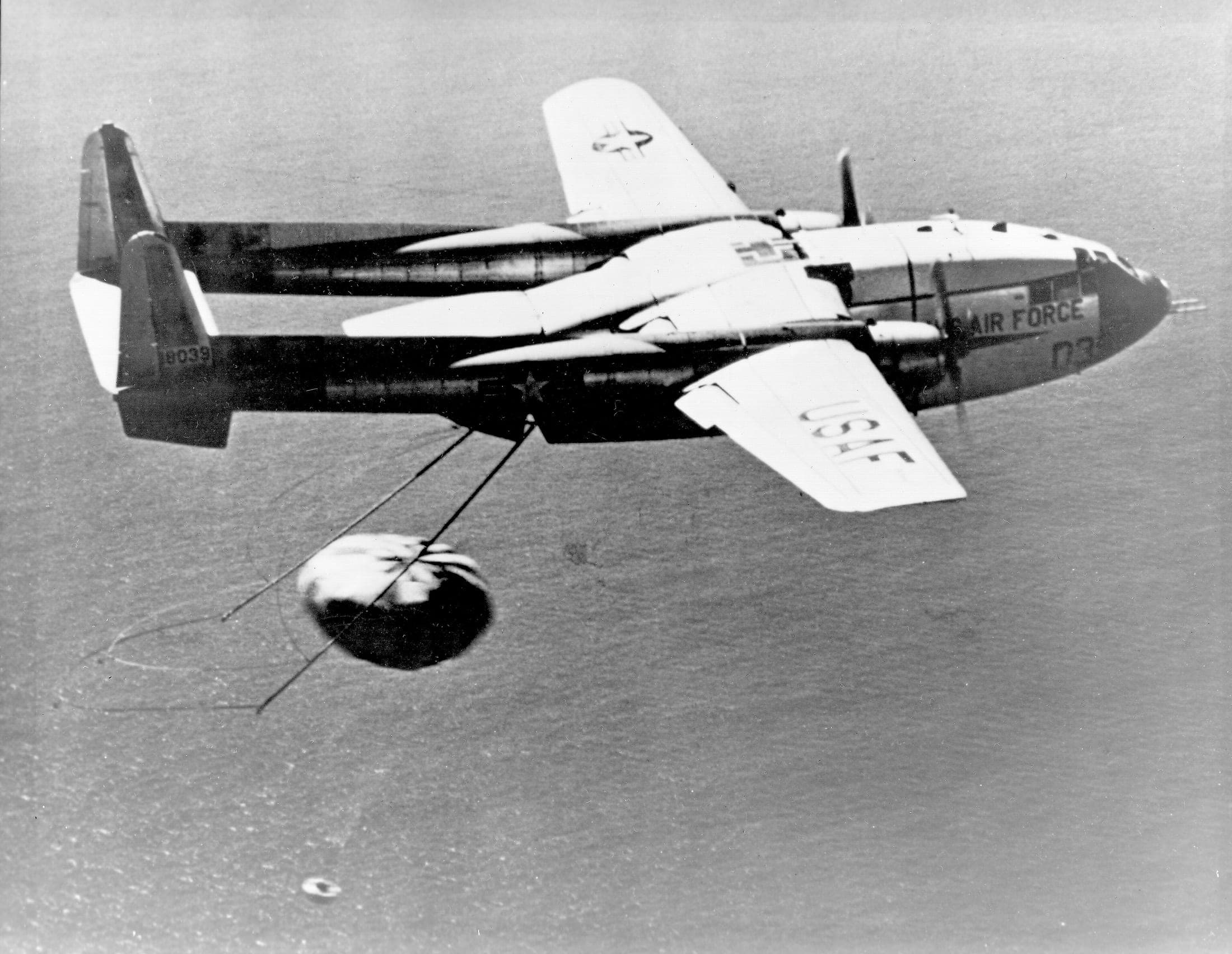
The program, CORONA, was a joint project of the Central Intelligence Agency and the Air Force. Each satellite carried a panoramic camera and a roll of film. When the film was exposed it was wound into a capsule, ejected, slowed by a heat shield and a parachute, and caught in mid-air over the Pacific by an aircraft trailing a trapeze of hooks.
In public it was called DISCOVERER and described as a scientific program studying satellite technology and the effect of space on living things. Discoverer 3 carried four black mice. It failed to reach orbit.
So did most of what followed. Twelve flights in a row failed — at launch, in orbit, in the camera, or on the way down. Discoverer 13, in August 1960, carried no camera and an American flag. Its capsule was fished out of the sea, the first object ever recovered from orbit, and the flag was presented to President Eisenhower.
Discoverer 14 brought back film. On 19 August 1960 Captain Harold Mitchell, flying a C-119 named Pelican 9, caught the capsule on his third pass at about 8,000 feet, some 360 miles southwest of Honolulu. That single roll covered more of the Soviet Union than every previous U-2 flight combined.
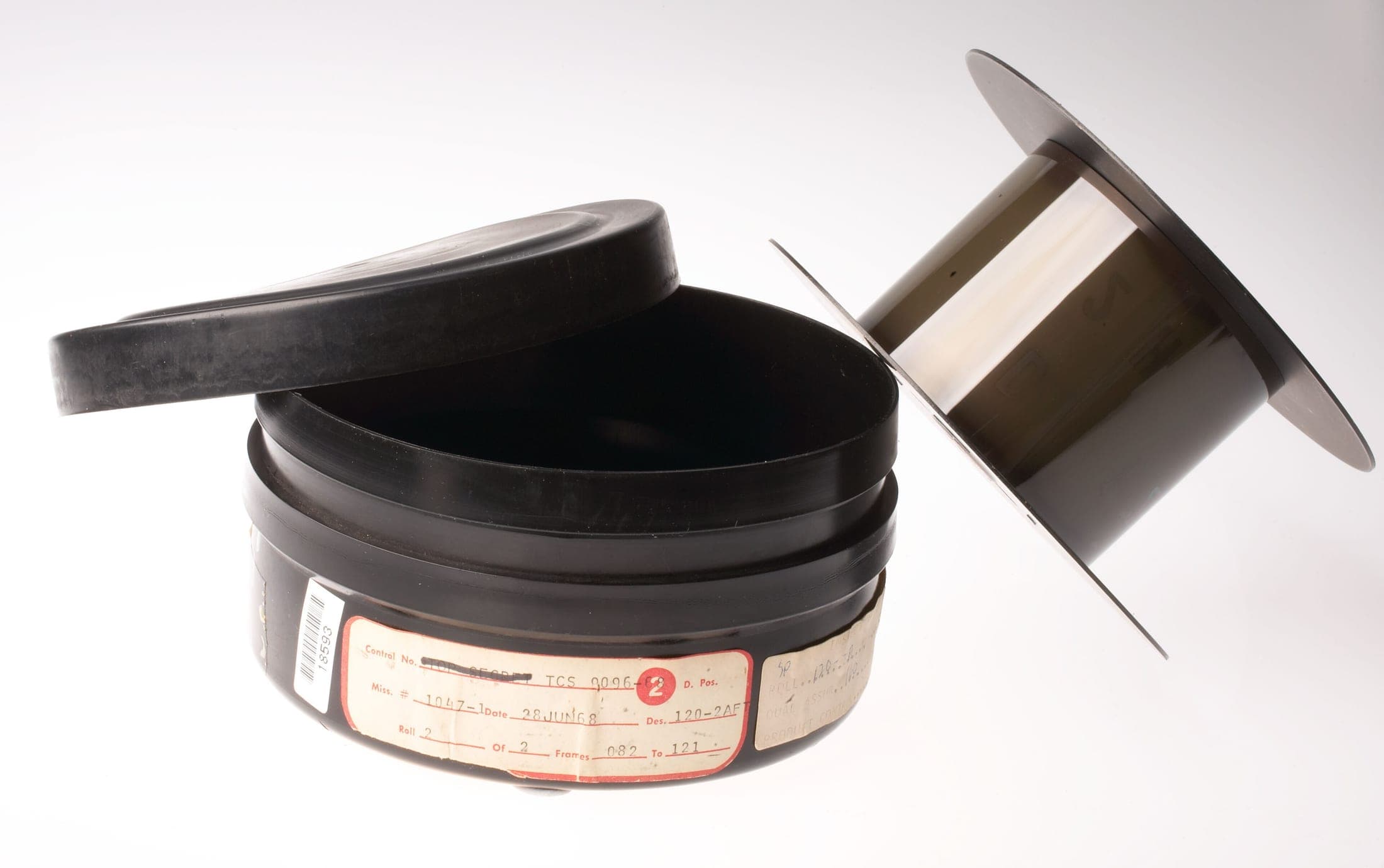
§ 0139,000 cans
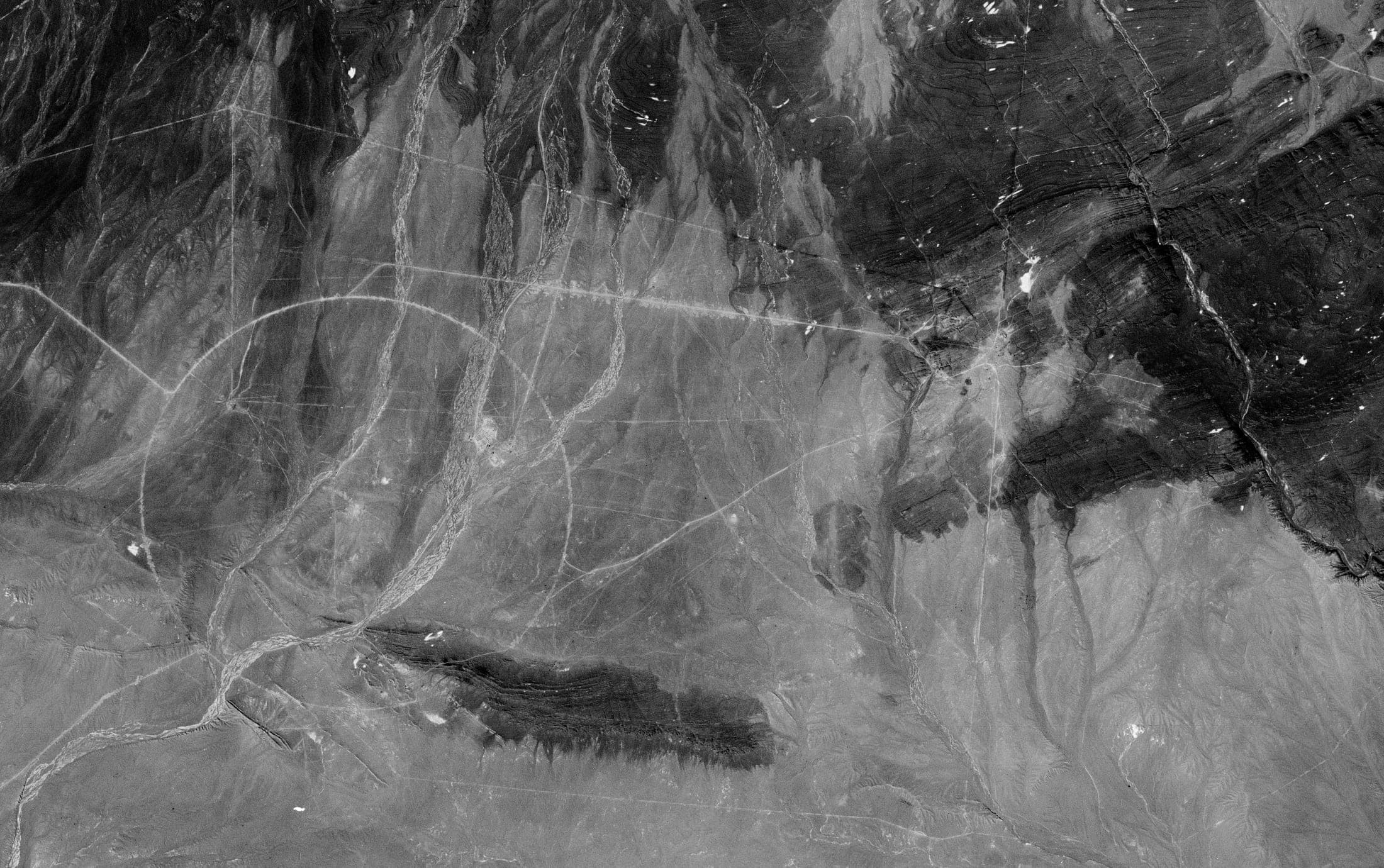
CORONA flew 145 missions between 1960 and 1972, under camera designations KH-1 through KH-4B. Ground resolution improved from about forty feet to about six. It returned more than 800,000 images on 2.1 million feet of film, stored in 39,000 cans. Recovery was handled by the 6593rd Test Squadron (Special), out of Hickam, Hawaii.
On 22 February 1995 President Clinton signed Executive Order 12951, declassifying the imagery. Two days later it was shown to the public at CIA headquarters. It now sits in the National Archives and the U.S. Geological Survey, where it is used by archaeologists, geographers and environmental scientists.